Mostrando entradas con la etiqueta Thinking skills. Mostrar todas las entradas

miércoles, 26 de octubre de 2016

Thinking skills: James Bulger case

By analyzing the whole case of James Bulger's murder, our reasoned judgement is as follows:
Corroborative and conflicting evidence:
- One of the boy's stepfather owned a collection of violent videos.
- The boys would watch violent videos as they skipped school.
- The stepfather of one of the boys had rented "Child's Play 3", a violent film, one week before the incident.
- There were significant similarities between scenes in the film and the killing of Hames Bulger.
- One of the children had parental issues: a drunken mother and suicide tendencies. The other one had behavior issues. Both children lived in poverty and had divorced parents.
Balance of evidence:
The press campaign suggests that the boys' actions may have been influenced by video nastiest. This is also supports this point of view. On the other hand, the police states that  statistics fail to prove a reliable measure of crime; there's no way to really prove te children have watched the nasties.
While it is true that video nasties can affect children's attitudes towards the actions they take, we believe that the biggest cause of their behavior is due to the family background they grew up in

domingo, 26 de junio de 2016

The Wall

The Wall: Activities
Julieta Veo


1: 1. The boy sees masks on the faces of the people in the train. Later he sees similar masks on the faces of the children in his fantasy. What is the meaning of that?
The scene where the people in the train got masks on their faces is linked with a historical event, when the Jews were taken to concentration camps during Hitler’s dictatorship. Afterwards, the boy sees masks on the faces of the children in his fantasy who are dragged towards a painful end which represents the lack of personal thoughts due to the possessive educational system. In both cases, the masks represents the repression of individuality. The faceless persons portray a dramatic scene, they don’t look human and this is caused due to the systems and its laws. The lack of expression and to be negatively equal to the rest are also some features that masks symbolise.


2: The riot scene ends and the camera returns to the boy in the classroom as the children recite the lesson. Think of a possible explanation for this.
I think the riot scene was a deep wish the boy got, and so it was his imagination the one that created the chaos portrayed after he was hitted unfairly by his professor. The educational system was harsh and wrongful, but though children wanted to shout and deny it, literally causing disturbs and a total liberation of manipulation, it was almost impossible to express yourself, and that’s why on the final scene the boy is still on the classroom unable to do something about injustice.


3: What kind of education does the movie portray? Use the song “The happiest days of our lives” to help you.
Linked to my answer in point 2, the education the movie portrays is terribly strict and cruel. Teachers shaped the minds of the kids in order to think in one way, the way society wants. It was a “lesson” the repetition of a concept, totally cold and intolerable towards variations. Being able to express your opinions or thoughts was unacceptable, we can see this situation when the derisive teacher humiliates his student who wrote a poem, whatsmore the mocking teacher “corrects” the student mistaken action by hitting him with a stick. Shamefully, this was the educational system which repressed students ability to “think out of the box”.


4:  Education is only one of the various social institutions the movie deals with. What others did you notice and how are they portrayed?
The other “social institution” I can remember that had appeared in the movie is a political rally.


5: We, in Argentina, often rely on education to solve most of our social problems. We blame education, or the lack of it, for many of them. Consider the huge success (described in the text below) of the song “Another brick in the wall” which claims “we don’t need no education” and compare it to what you think about education.
The song “Another brick in the wall” claims children don’t need education and challenges the authorities rejecting their control over them. What I think is that  the youth need to be educated with values and on a creative way. I agree on the fact we have to reject the educational system that aims to overshadow kids minds. While it is true that nowadays with the amount of information we can access and the fact that education is firstly developed in our homes, it is not that we are able to “self-teach” us completely. We need the mentoring of experts in order to increase our knowledge. In addition, nowadays and in most parts of the world, education is also a way to shape our personality and our thoughts, we are able to express freely our points of view. This is a controversial topic, we can argue for long time if we need or not education on our lives but I believe we do. We do in order to learn and after that, create our own views and opinions, we do in order to grow as a thinkable person which acts honestly and respecting his or her convictions and the rest´s.

6: Up to what extent is education a way of “thought control”?
I think, education at least nowadays, is both. Presents an open space that lets students think freely but about specific topics which are previously controlled and supervised by authorities. So, students are able to reason, to make up personal opinions and come up with beliefs and different arguments though limited by almost invisible boundaries. Teachers tell us what is right or wrong according to a punctual source, and so we adopt the same thought regardless we are also encouraged to express candidly. We know, we all tend to be biased but such great systems as the educational one, directs us “kindly” to think on a specific way. The way our superiors want to, not talking  just about school authorities but beyond.


7: Explain the meaning of the double-hammer symbol. Use the scene “In the flesh” to answer.
Hammers are a major symbol which is portrayed all along the movie.
The scene “In the flesh” portrays sort of a political theme where the main character adopts the role of a harsh and claimed dictator. The hammers take on a more militaristic aspect. As I see it, the hammer is a tool that constructs but also destructs, therefore, as the political symbol which represented the society was the “drawing” of two hammers, I can think about the fact how the authorities on one side “construct” the people they wanted to take part of their society, by shaping their thought and expressions and by the other side, they “destruct” the ones who didn’t fit to their plan by repressing them in any way.


8: The children falling into the meat grinder is a visual metaphor that makes a powerful point. What is the metaphor and what point does it make?
One of the most shocking scenes of the movie, is the one where children fall into the meat grinder. The whole disturbing picture can be analyse.
Firstly, the scene portrays how children march through a complex mechanism that creates them on faceless people who eventually lack of their right to be human.  After walking with deliberation the kids  finally fall to a meat grinder. I think the metaphor in the scene is how the educational system or the social sphere pressures the youth and so future generations to think as they planned, and so fit without any problem into a scheme which requires order and rule avoiding individualism, which is a “problem”. This system is represented by the meat grinder which makes people equal and dependent, without special features, just one more of the mass.


9: What is the wall? Can you say whether it is a good thing or not?

The wall in the movie is constructed by the experiences of the protagonist though we can adopt this metaphor for ourselves. We build a wall which is constructed by our life history and the moments we went through, sometimes to separate us from the rest of the world. However in the case of the protagonist of the movie, the wall it’s not a positive thing.  All his struggles are the bricks that constitute the wall, a wall full of unfairness and harsh situations.  The main character isolates himself in his mental and painful wall, each brick further closing him off from the rest of the world.
                           

domingo, 8 de mayo de 2016

United States coldest case murder conviction

Maria Ridulph Case
The kidnapping and murder of Maria Ridulph was the oldest cold open case to reach the courts in the history of the United States.
Starting point:
On December 3rd 1957, 7 year old, Maria Ridulph was abducted from Sycamore, Illinois. After dinner Maria was playing in the snow with her friend Kathy Sigman when a young man who called himself “Johnny” approached the girlies and offer them a piggyback ride. A few minutes later, Kathy went to her house to fetch her gloves because is was freezing outside but when she came back Johnny and Maria were nowhere to be seen.
Looking for Maria:   
Kathy went to the Ridulph’s house to tell everybody what had happened. Chuck, Maria’s older brother went outside to look for the girly but there was not any signal. Rapidly, the men ran to the house of Ralph and Eileen Tessier (two blocks from the Ridulph). Ralph had a hardware store and the idea was to carry on with the search asking the owner to collaborate with flashlights.
Police investigation:
The following days, the police questioned Eileen Tessier about the events of December 3. John stepsisters heard how his mother told the police something they knew it was not true: that John had been home all night.
In addition, there were conflicting reports about the exact time of the disappearance of Maria. The Sycamore police chief told FBI agents that Kathy and Maria had gone out to play at 18:02, but the county sheriff said Maria had not called Kathy until 18:30. Maria's mother later changed his statement and said the girls could have gone outside even at 17:50.
Kathy Sigman spent hours watching carefully the pictures of people on file by the police, but could not find Johnny.
The local police was sure no one in Sycamore could have done such a thing. It had to be an action done by a trucker or someone passing by. The FBI was not so sure. There were several potential suspects in the village. Police questioned all "known sexual deviants". They investigated a voyeur and followed clues that led up to two men nicknamed "Commando" and "Mr. X”.
Maria’s body is found:
Five months later Maria's body appeared, 190 kilometers from her home. A man found his skeleton under a fallen tree on a farm. The cause of death couldn’t be determined.
John Tessier/ Jack Mccullough
The FBI initially showed interest in Tessier as a suspect, a boy from the neighbourhood nicknamed “Commando”. Three days after Maria disappeared, an anonymous woman warned that a young man named "Teschner" who lived in the neighborhood matched with the description of the suspect. A pair of FBI agents showed up at the Tessier house.
Tessier told them then, and continues stating today, he was in Rockford, Illinois, about 65 kilometers northwest of Sycamore, when they kidnapped Maria. His parents supported his story, and was verified by an irrefutable fact: someone who gave his name made a call from Rockford to the Tessier’s house at 18:57, on 3 December 1957.
There was much discussion about the time of the disappearance of Maria. If the kidnap was done around 19:00, then Tessier had an armored alibi. But if they did around 18:15, then something not locked. John could have gone to Rockford Sycamore car and having arrived at 19:00 before disposing Maria’s body.
No one disputes that John traveled to Chicago for a physical test at the military recruiting center. Tessier said he was walking around Chicago the afternoon of December 3, stood in a cabaret show and then went to Rockford to leave the papers in the recruitment center. Recruiters confirm that they saw by the office between 19:15 and 19:30 that afternoon.
Two days after the FBI interrogated Tessier, he was subjected to the lie detector test. When asked if he had ever had sex with children, Tessier admitted having been involved in "some kind of sex play" with a girl but had occurred several years before. He stated that the episode was over and had no relationship with Maria.
Those details did not raise suspicions at the time. Nor the contradictory versions of his mother when she told the police that his son was home all night and the FBI that was in Rockford that night. Finally, an FBI agent concluded his report by emphasizing: "There will not be other research related to this suspect”
New Investigation:
In January 1994, Eileen Tessier was on the verge of death but she had a secret she didn't want to take to the grave. "Janet!" She called her daughter, according to the statement made to the court itself many years later. Janet ran to her mother's bed. Eileen grabbed her wrist and spoke.
“That girl who disappeared. It was John. You have to tell someone.” Although Janet was a baby when her neighbor of seven years disappeared in 1957, she knew immediately what her mother was confessing, her brother, John kidnapped and killed Maria Ridulph.
It was a decade later when Janet Tessier tried one last time after several denies to tell her testimony. She sent an email to the Police of Illinois: "A seven year old girl named Maria Ridulph disappeared. Her remains were found in early spring of 1958. I think John Tessier, of Sycamore, is responsible for her death. Today he lives around Seattle under the name of Jack McCullough. "
Her urge caught the attention of a boss. He called Janet and she told him how her mother had told her on the deathbed that his brother had kidnapped and killed Maria. "I can not promise anything," said the police chief, "but we will try."
He assigned the case to two men, Larry Kot and Brion Hanley. Kot, 57, was a civilian analyst and worked for the police in Illinois. “I had never heard of the case Ridulph”, but soon he gathered information that cast doubt on the suspect's alibi.
Brian Hanley, 41, made the preliminary work and began by Janet Tessier and her brothers. None had nothing good to say about John, especially Jeanne who was sexually abused at the age of 14 by John.
Crime Chronology:
Tessier said he was in Chicago on Tuesday morning December 3, getting a medical checkup. Kot found that it was true. But he realised that Tessier left the recruitment center at noon. He was later seen in Rockford, almost 150 kilometers from Chicago, about 19:15. But there was no witness to verify his whereabouts between noon and 19:15, which meant he could have easily gone back to Sycamore before appearing in Rockford. Kot examined the account of another witness, the dealer of heating oil. The man knew Kathy Sigman and her family and remembered that the girl had greeted him when he was delivering fuel into a nearby house. He arrived there at 18hrs and was 15 to 20 minutes unloading the oil. When he left, about 18:20, he did not see the girls.
Kot concluded that Maria had been kidnapped before 18:20. If Tessier parked his car in the back entrance, where they found the doll Maria, Rockford could have been addressed directly with the girl in her car. It was a journey of 64 kilometers, and could have come to Rockford in less than an hour.
The call made from Rockford to the house of Tessier, was a key part of John alibi also fit into this new timeline. Phone records showed that the call was made at 18:57 but did not point from which place of Rockford had been realized. Tessier could have called home from a pay phone outside the village.It may be that Tessier's alibi was not as infallible after all.

Arrest:
Hanley took six photos and placed them on the table. Five of them had been removed from Sycamore school yearbook. The photo of John Tessier was a little different. Kathy eliminated several pictures immediately but looked at two: No. 1 and No. 4. He studied for two long minutes. "He is," she finally said, noting the number 4. I had no doubt. Now the detectives had a real suspect. It was time to visit to "Johnny".
Seattle two policemen who had joined the case learned that the "person in question" worked in a block of apartments for elderly people. He called himself Jack McCullough because he had changed the name in the early 90's when he married his fourth wife, Sue, for nearly two decades.
He was a former policeman. The agents examined his file and discovered a lurid past. They learned that he had been dismissed from the police after being accused of abusing a child under 15 years who had run away from home. They also found out about the photo of her 11 year old daughter naked hidden in the bottom of a drawer. Police arrest McCullough on June 29, 2011. Jack McCullough returned to Sycamore handcuffed on July 27, 2011, the same day authorities exhumed the body of Maria Ridulph.
McCullough would face trial for rape before facing trial for the murder of Maria.
Judge Robbin Stuckert raised many doubts after people tell their testimonies which were related to John’s dirty and obscure attitudes. He wondered why the applicant had waited decades to publicize the crime. But the verbal war between Stuckert and Campbell led the judge to withdraw from the murder trial. The case was referred to Judge James C. Hallock.
During the trial, in September 2012, the statement Kathy Sigman on stage was decisive when retold how a stranger who called himself Johnny offered them a piggyback ride, and how Maria and Johnny disappeared when she went home to find her mittens.
Kathy stood firm when she was shown the six pictures of the suspects she had already seen in 2010. Janet Tessier testified about the statement of her mother on her deathbed.
Then three prison informers confirmed that in a conversation with McCullough, he had admitted that he had killed Maria. The trial lasted four days. No McCullough took the stand, so he could not present his alibi. The judge issued the verdict. Guilty on all counts: murder, kidnapping and abduction of a child. And Johnny went to prison.


Jack McCullough, 76, was serving a life sentence for the 1957 murder of 7-year-old Maria Ridulph. Judge William Brady threw out the conviction after a prosecutor found "clear and convincing evidence" that McCullough was wrongly found guilty.
McCullough's lawyers and DeKalb County state's attorney Richard Schmack argued that McCullough's conviction was based on false testimony, improper legal rulings controlling the evidence presented, and a timeline that was tweaked some 50 years after the fact to rule out McCullough's alibi.
McCullough has long insisted that he couldn't possibly have abducted and killed the child because he was 40 miles away in Rockford, Illinois, talking to recruiters and trying to enlist in the U.S. Air Force when she was taken. The prisoner was set free on 2016.




domingo, 24 de abril de 2016

Expertise

How do these items question the credibility of expert sources?


The term "expertise" is frequently used in order to refer to a specialist knowledge and skill in a particular field. Expertise results from training and experience in that field.


Item A: In a way this item shows how expertise fails towards a society. Item A focus on the medicine field and claims their unsuccessful attempts to diagnose and find a cure for a problem the majority faces. The text states how doctors treat the individual and do not focus on the wider community, it shows the effectiveness of doctors to find and change the causes of illnesses, which appear mainly due to bad working conditions or poor hygiene. Therefore the credibility of experts sources is questioned, expertise is seen as harmful.

Item C: In this case, the text portrays how expertise created a misjudgement towards a situation which was not a medical disorder nor a health problem. Long time ago, slaves were associated with having a specific illness called Drapetomania, one that made them want freedom and independence. Item C shows the incorrect judgements experts came up with and it is also linked with changing expertise.

Item D: This item shows how experts in the medicine field misdiagnose, expertise is seen as harmful once more due to the fact professionals associated homosexuality as an terrible illness which needed a cure. Expertise and its credibility are questioned once more because of the misjudgments and prejudice towards a group of people, and the harm homosexuales faced. Moreover this situation was based on changing expertise, nowadays almost the whole population accepts homosexuality so experts tried to fit on the new values.

domingo, 9 de agosto de 2015

Advertising cigarettes

1. How does avertising help tobacco to defend their vested interests?
2. Cigarette advertising distorts the truth. Briefly comment on this view.


1. Propaganda and advertising helps tobacco companies and business to defend their product. People is convinced by propaganda as it encourages and promises happiness, joy and guarantees a “better life”. The addiction and dependence, the terrible effects in health and self appearance are not mentioned and do not even appeared on the advertisements. Therefore, the vested interests of the companies, in this case, tobacco ones hide the negative aspects of their product with attractive and eye catching propaganda.

2. Cigarette advertising, as well as other products propaganda, make people believe that by buying the product which is offered, they can achieve happiness and a more amused life. They are convinced by the advertisements that cigarettes make everything better and benefit oneself. 
For example, the first image shows how an advertisement portrays a man luring with a woman and the key of the effective seduction are the cigarettes. The male chauvinist on the image is supported by the product. 


sábado, 8 de agosto de 2015

"Mad men"

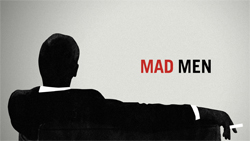
In thinking skills class, we saw an extract of one episode of "Mad Men" , an American period drama television series. Afrter it, we had to answer to questions:

1.Identify some of the vested interests in this scene. How do these work?
2. Why is Peter's idea rejected, and why is Don's idea accepted?

1. One of the first vested interests that appeared on the video is when Don explains his idea. According to it, tobacco is seen as an element that gives a person happiness (though in fact, it gives dependence), the way Don explains his thought, makes him avoid mentioning part of the real information which are the terrible effects smoking produces.
Other vested interest we could identify was when the men rejected Peter's idea. These men ignore that opinion because it was not convenient for their business


2. Peter’s idea is rejected because he made reference of the great damage tobacco creates in people's life, mentioning it's a life danger and it was obviously, not beneficial for the company. On the other hand, Don’s idea was quickly accepted because it did not mentioned every risks tobacco caused. In addition, Don portrayed tobacco as something people need to be happy making propaganda still look attractive


lunes, 3 de agosto de 2015

Death penalty

Death penalty

Death penalty is the punishment by death for a crime. Nowadays, this affair is quite controversial and has arised discussion in almost each nation and society. Countries such as Afghanistan, United States,Japan,Indonesia, among others, exert the death penalty as one of the main punishments. Nevertheless, I think this type of sanction is not the proper way to achieve solutions.
To begin with, I reject the ideas of the retributive and utilitarian theories. The retributive theory considers that punishment is intended to make the criminal "pay" for his crime. I'm this case, punishment is justified because it is what the criminal deserves (An eye for an eye and a tooth for a tooth). The utilitarian theory instead, states that the rationale of punishment is entirely to prevent further crimes: the infliction of pain on criminals provides them with a motive not to repeat their offence. Therefore, punishment is an instrumental good as society's general security and happiness is assumed to be assured.
From my point of view, neither of these theories is a fair way to judge someone who made a mistake. That's why, in my opinion the theory of rehabilitation, which argues that people should be less concerned in punishing criminals and more concerned with reforming the, portrays a more reasonable and equitable terms. I agree with the fact that controlling or suppressing the offender's criminal tendencies by a process of re-education and physiological treatment while in custody is a better and a more decent method. I think that there is an assumption to stand up which is that the criminal is sick rather than wicked, and therefore needs help rather than punishment though spending the rest of their lives in prison according the crimes made in each case.
In conclusion, though death penalty can look like quick and efficient but I strongly believe that rehabilitation and the process of reforming criminals until they are cured is the best option.